Monday, August 25, 2014

Well, we're waiting, Frank the Red Nose!


Oh, end  the silence! Call out  with a hundred thousand tongues. I see that the world is sick because of the silence, the bride of Christ is pale." (St Catherine of Siena)

Tuesday, August 12, 2014

Remember when the Catholic Church was where men like Chesterton and Belloc could feel comfortable?

Lepanto by G. K. Chesterton

White founts falling in the courts of the sun,
And the Soldan of Byzantium is smiling as they run,
There is laughter like the fountains in that face of all men feared,
It stirs the forest darkness, the darkness of his beard,
It curls the blood-red crescent, the crescent of his lips,
For the inmost sea of all the earth is shaken with his ships.
They have dared the white republics up the capes of Italy,
They have dashed the Adriatic round the Lion of the Sea,
And the Pope has cast his arms abroad for agony and loss,
And called the kings of Christendom for swords about the Cross,
The cold queen of England is looking in the glass;
The shadow of the Valois is yawning at the Mass;
From evening isles fantastical rings faint the Spanish gun,
And the Lord upon the Golden Horn is laughing in the sun.
Dim drums throbbing, in the hills half heard,
Where only on a nameless throne a crownless prince has stirred,
Where, risen from a doubtful seat and half attainted stall,
The last knight of Europe takes weapons from the wall,
The last and lingering troubadour to whom the bird has sung,
That once went singing southward when all the world was young,
In that enormous silence, tiny and unafraid,
Comes up along a winding road the noise of the Crusade.
Strong gongs groaning as the guns boom far,
Don John of Austria is going to the war,
Stiff flags straining in night-blasts cold
In the gloom black-purple, in the glint old-gold.
Torchlight crimson on the copper kettle-drums,
Then the tuckets, then the trumpets, then the cannon, and he comes.
Don John laughing in the brave beard curled,
Spurning of his stirrups like the thrones of all the world.
Holding his head up for a flag of all the free.
Love-light of Spain - hurrah!
Death-light of Africa!
Don John of Austria
Is riding to the sea.
Mahound is in his paradise above the evening star,
(Don John of Austria is going to the war.)
He moves a mighty turban on the timeless houri's knees,
His turban that is woven of the sunset and the seas.
He shakes the peacock gardens as he rises from his ease,
And he strides among the tree-tops and is taller than the trees,
And his voice through all the garden is a thunder sent to bring
Black Azrael and Ariel and Ammon on the wing.
Giants and the Genii,
Multiplex of wing and eye,
Whose strong obedience broke the sky
When Solomon was king.
They rush in red and purple from the red clouds of the morn,
From temples where the yellow gods shut up their eyes in scorn;
They rise in green robes roaring from the green hells of the sea
Where fallen skies and evil hues and eyeless creatures be;
On them the sea-valves cluster and the grey sea-forests curl,
Splashed with a splendid sickness, the sickness of the pearl;
They swell in sapphire smoke out of the blue cracks of the ground,-
They gather and they wonder and give worship to Mahound.
And he saith, 'Break up the mountains where the hermit-folk can hide,
And sift the red and silver sands lest bone of saint abide,
And chase the Giaours flying night and day, not giving rest,
For that which was our trouble comes again out of the west.
We have set the seal of Solomon on all things under sun,
Of knowledge and of sorrow and endurance of things done.
But a noise is in the mountains, in the mountains, and I know
The voice that shook our palaces - four hundred years ago:
It is he that saith not 'Kismet'; it is he that knows not Fate;
It is Richard, it is Raymond, it is Godfrey at the gate!
It is he whose loss is laughter when he counts the wager worth,
Put down your feet upon him, that our peace be on the earth.'
For he heard drums groaning and he heard guns jar,
(Don John of Austria is going to the war.)
Sudden and still - hurrah!
Bolt from Iberia!
Don John of Austria
Is gone by Alcalar.
St Michael's on his Mountain in the sea-roads of the north
(Don John of Austria is girt and going forth.)
Where the grey seas glitter and the sharp tides shift
And the sea-folk labour and the red sails lift.
He shakes his lance of iron and he claps his wings of stone;
The noise is gone through Normandy; the noise is gone alone;
The North is full of tangled things and texts and aching eyes,
And dead is all the innocence of anger and surprise,
And Christian killeth Christian in a narrow dusty room,
And Christian dreadeth Christ that hath a newer face of doom,
And Christian hateth Mary that God kissed in Galilee,
But Don John of Austria is riding to the sea.
Don John calling through the blast and the eclipse
Crying with the trumpet, with the trumpet of his lips,
Trumpet that sayeth ha!
Domino gloria!
Don John of Austria
Is shouting to the ships.
King Philip's in his closet with the Fleece about his neck
(Don John of Austria is armed upon the deck.)
The walls are hung with velvet that is black and soft as sin,
And little dwarfs creep out of it and little dwarfs creep in.
He holds a crystal phial that has colours like the moon,
He touches, and it tingles, and he trembles very soon,
And his face is as a fungus of a leprous white and grey
Like plants in the high houses that are shuttered from the day,
And death is in the phial, and the end of noble work,
But Don John of Austria has fired upon the Turk.
Don John's hunting, and his hounds have bayed -
Booms away past Italy the rumour of his raid.
Gun upon gun, ha! ha!
Gun upon gun, hurrah!
Don John of Austria
Has loosed the cannonade.
The Pope was in his chapel before day or battle broke,
(Don John of Austria is hidden in the smoke.)
The hidden room in man's house where God sits all the year,
The secret window whence the world looks small and very dear.
He sees as in a mirror on the monstrous twilight sea
The crescent of his cruel ships whose name is mystery;
They fling great shadows foe-wards, making Cross and Castle dark,
They veil the plumèd lions on the galleys of St Mark;
And above the ships are palaces of brown, black-bearded chiefs,
And below the ships are prisons, where with multitudinous griefs,
Christian captives, sick and sunless, all a labouring race repines
Like a race in sunken cities, like a nation in the mines.
They are lost like slaves that sweat, and in the skies of morning hung
The stair-ways of the tallest gods when tyranny was young.
They are countless, voiceless, hopeless as those fallen or fleeing on
Before the high Kings' horses in the granite of Babylon.
And many a one grows witless in his quiet room in hell
Where a yellow face looks inward through the lattice of his cell,
And he finds his God forgotten, and he seeks no more a sign -
(But Don John of Austria has burst the battle-line!)
Don John pounding from the slaughter-painted poop,
Purpling all the ocean like a bloody pirate's sloop,
Scarlet running over on the silvers and the golds,
Breaking of the hatches up and bursting of the holds,
Thronging of the thousands up that labour under sea
White for bliss and blind for sun and stunned for liberty.
Vivat Hispania!Domino Gloria!
Don John of Austria
Has set his people free!
Cervantes on his galley sets the sword back in the sheath
(Don John of Austria rides homeward with a wreath.)
And he sees across a weary land a straggling road in Spain,
Up which a lean and foolish knight forever rides in vain,
And he smiles, but not as Sultans smile, and settles back the blade...
(But Don John of Austria rides home from the Crusade.)
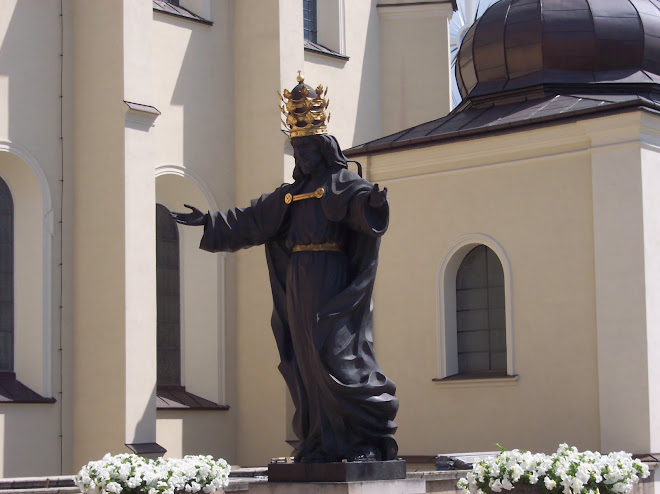
Monday, August 11, 2014

Words of Wisdom from Pope Jim

Words of Wisdom from Pope Jim

11th August 2024


1. It's all according, really - you've just got to make the best of it.

2. Don't be a moaning minnie - it won't get you very far (culled from Harold Wilson, the sage of somewhere).

3. It never rains but it pours, but keep smiling.

4. Keep your bloody stupid boring opinions to yourself. Nobody wants you to save them.

5. Is there any more ketchup? If the cap don't fit, change the size of your head.

6. Love is cool, so love as many people as you can as much and as often as possible.

7. Don't be a boring, rosary-counting coprophagite.

8. Make time to chill out!

9. You ain't seen nothing yet! I'm gonna give this so-called Church a real shake up with the help of our separated brother and sister bishops in the protestant churches.

10. Massacre of Christians in Milton Keynes? That's an internal matter for the British Government, innit?


Tuesday, July 8, 2014

Don't you just love the smiles?

Margaret Sanger


Sœur Marie-Rose Genoud


Oh dear!

To Vatican Radio, Archbishop Giancarlo Bregantini of Campobasso-Bojano, where the Pope visited Saturday, said 200 Calabrian prisoners didn’t go to Mass because they felt it doesn’t make sense if they’re “excommunicated.”
Clearly the consciences of the prisoners, many serving for mafia crimes, have been greatly "affected," he said. In response, the prelate noted, the prison’s chaplain asked him to speak to the inmates about Francis' strong words. (D.C.L.)

Monday, July 7, 2014

Euthanasia? After you, sister!

Un certain sourire


Sœur Marie-Rose Genoud

Une moniale ursuline du canton du Valais, en Suisse, déjà remarquée pour son combat en faveur des immigrés, qui lui a valu le « Prix Courage » (on se demande bien quel courage est nécessaire pour mener cette lutte donnée en haute priorité par tout l’Occident), s’est déclarée favorable au suicide assisté. Sœur Marie-Rose Genoud a affirmé soutenir « toute personne qui, après mûre réflexion et en toute connaissance de cause, choisit de mettre fin à sa vie ». « Dieu est pour la liberté », a-t-elle affirmé. Une position qui semble ignorer royalement le fait que la vie ne nous appartient pas en propre, et que seul Dieu en dispose. L’église catholique en Suisse continue donc de « s’ouvrir au monde », sous les applaudissements frénétiques de celui-ci.


An Ursuline nun in the canton of Valais, Switzerland, already noted for her struggle for immigrants, which earned her the "Courage Award" (one wonders what courage is needed to lead this fight given high priority by all the West), has expressed support for assisted suicide. Sister Mary Rose Genoud said she would support "any person who, after careful consideration and knowingly chooses to end his life." "God is freedom," she said. A position that seems magnificently to ignore the fact that life is not our own, and that only God may dispose. The Catholic Church in Switzerland therefore continues to "open up to the world" with her frantic applause. (My rough translation)


With grateful acknowledgements to "Riposte Catholique"

Friday, July 4, 2014

écrasez l'infâme!

I have just returned from spending a grievous 4 days in Paris, a city I have known and loved since I first went there at the age of seventeen. Of my visit, more later.

I had read about the kind of aesthetic vandalism favoured by the sons and daughters of Clemenceau, Foch, and de Gaulle, but nothing prepared me for the piece of idiocy below, on the ceiling of a beautiful gallery in the Louvre, by the appropriately inelegantly named Cy Twombly (male). The comment which springs to mind is Voltaire's "écrasez l'infâme!" but the miscreant is apparently already dead and beyond retribution. 


I must therefore be content with "O tempora O mores!" to which I add, "A pox on't".

Friday, June 20, 2014

Hold me back!

Photo snitched from "That the bones you have crushed may thrill"
Man posing as Archbishop attempts to bestow Apostolic Blessing on genuine, but very worrying, Pope.

Friday, June 6, 2014

Don John of Austria, King John Sobieski III, Ferdinand and Isabella, maybe you got it all wrong

Heathen prayers in the Vatican? What is this Pope thinking of?


Hat-tip Laurence England and Liberty News:

The Quran contains at least 109 verses that call Muslims to war with nonbelievers for the sake of Islamic rule. Some are quite graphic, with commands to chop off heads and fingers and kill infidels wherever they may be hiding. Muslims who do not join the fight are called ‘hypocrites’ and warned that Allah will send them to Hell if they do not join the slaughter.
Unlike nearly all of the Old Testament verses of violence, the verses of violence in the Quran are mostly open-ended, meaning that they are not restrained by the historical context of the surrounding text. They are part of the eternal, unchanging word of Allah, and just as relevant or subjective as anything else in the Quran.
The context of violent passages is more ambiguous than might be expected of a perfect book from a loving God, however this can work both ways. Most of today’s Muslims exercise a personal choice to interpret their holy book’s call to arms according to their own moral preconceptions about justifiable violence. Apologists cater to their preferences with tenuous arguments that gloss over historical fact and generally do not stand up to scrutiny. Still, it is important to note that the problem is not bad people, but bad ideology.
Unfortunately, there are very few verses of tolerance and peace to abrogate or even balance out the many that call for nonbelievers to be fought and subdued until they either accept humiliation, convert to Islam, or are killed. Muhammad’s own martial legacy – and that of his companions – along with the remarkable stress on violence found in the Quran have produced a trail of blood and tears across world history.
- See more at: http://www.libertynews.com/2014/06/shock-for-first-time-ever-pope-to-allow-reading-of-quran-and-islamic-prayers-at-vatican-this-sunday/#sthash.Qgd0m6Kb.OVhhLsd3.dpuf

Thursday, June 5, 2014

The creation of a cohesive, easily malleable group of people is the aim of governments

First, a little story, a true one.

A few years ago, when I was working for a homelessness charity In London, a young pregnant client asked me to help her get an abortion.

When I replied that, as a Roman Catholic, I could not help with an abortion, but suggested charities which could help her with preparing for the baby and finding a flat, she complained to the manager, who told me I could not continue to work for the organization, which was multicultural, and so valued and promoted all cultures. I was not open to the client’s culture.

I asked her if the organization practised religious discrimination, and reminded her that my application for the job had been supported by a reference from an openly Catholic priest.

She asked me if my anti-abortion stance was part of my “culture”. I replied, “No, part of my religion.” She relaxed at this, and said, ”We value and respect all cultures here, including yours.”

And so the conversation ended and I kept my job, on the understanding that my religion was just a part of my “culture”, like enjoying poetry, or alcohol, or jazz, or wearing a tie - quite acceptable as a lifestyle choice, as long as it poses no threat to the social cohesion demanded by governments from the disparate people they govern.

Culture and religion are not the same. For seriously religious people, their  co-religionist are their tribe, their  nation. Whoever shares my religion, whatever her or his ethnicity, colour, social class, personal hygiene, taste in music, shirts, or food, is  someone I can understand: a sister or a brother.

The creation of a cohesive, easily malleable group of people is the aim of  governments. To reach this goal, the divisive stony Decalogue of monotheistic religion must give way to the inclusive soggy ukase of the nanny state,  of adamantine hardness.

The governmental insistence on “diversity” is interesting, because it is self-contradictory. The diversity of a Muslim, or a Catholic does not accept the diversity of someone who practises homosexual sex. The diversity of a practising homosexual does not accept the diversity of a someone who states that such acts are against the natural law. Clearly diversity must pertain only to the cultural, not ethical, because ethical diversity raises too many problems. It must therefore be eliminated.

So what is the solution for those in authority?

Among the methods used  to erode ethical or religious diversity is ambiguity or imprecision. Nothing is right or wrong, but simply acceptable or unacceptable – but to whom? They word “culture” is used to cover religion, morality, dress, the arts, food – the list is long. This recourse to ambiguity is used not only by civil governments, but sometimes also by religious authorities. The ARCIC documents are an example. The old I.C.E.L. translation of the Mass, for example, used the phrase (of the bread before consecration) “it will become for us the Body of Christ”.

What do these words mean? Does “for us” mean “for our sake”, as in “my parents did a lot for me?”, or “in our opinion”, as in “for me, music is the greatest of the arts” - only for us, not for everyone? There is no ambiguity in the Latin, but I am not so sure that there was no vagueness in the minds of the translators. The books used twenty years ago in the preparation of my children for first Holy Communion avoided the divisive doctrine of Transubstantiation altogether. My parish priest in England when I asked him about this told me that my understanding of the Sacrament was too crude. “We have moved forward from all that”. Another weasel phrase – why do we always move forward, never sideways or backwards? Is theology also subject to Darwinian evolution, so that later is always better?

And what have we moved forward from? From plain speaking to anodyne obfuscation.


VERITAS IN CARITATE - truth in charity - is a fine motto. Truth curtailed by a desire to be tactful, or accepted, is not so fine. If no one knows what anyone means, no reasonable discourse is possible. Terms cannot be defined and no one can agree or disagree.